Today we make a visit to the kingdom of Tonga. Tonga was first visited by Abel Tasman in 1643. Yes, the same guy who discovered New Zealand. Tonga consists of 170 Island with a population of approximately 105,000.
Today we are docked at the largest Island Tongapatu in the capital city of Nuku’alofa with a population of approximately 28,000.
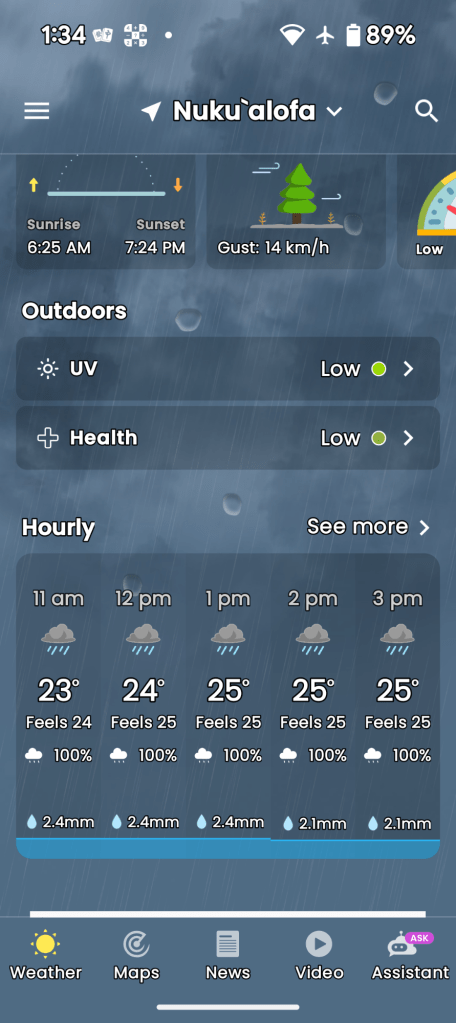
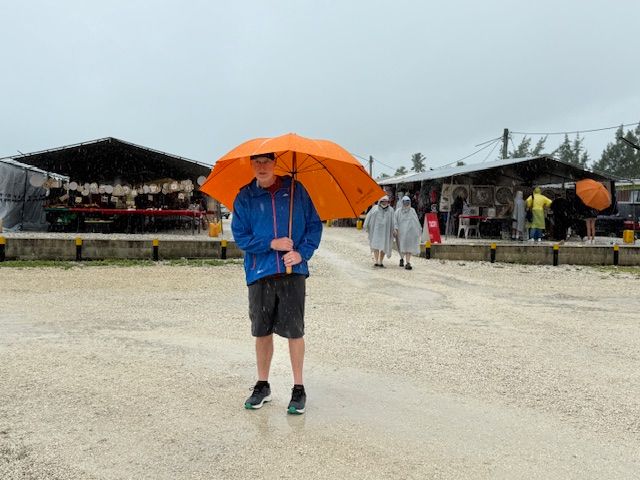
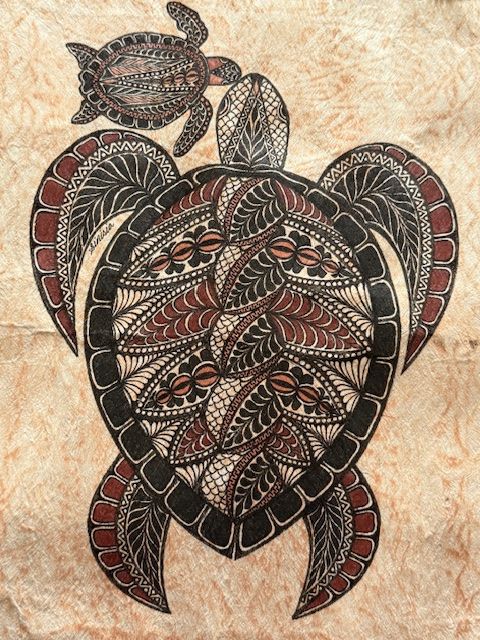
The weather today is just awful, It’s raining hard and the forecast is that it won’t let up all day. We didn’t book any tours today, as we visited and toured here a few years ago. This morning we put our rain jackets on and walked towards the market, about a half a mile walk. I felt bad for the local vendors, weather like this really effect their business. After buying another hat, which I really didn’t need, the lady previously thanked me and that gave me a good feeling spending the 10 bucks. Carol picked up a nice tapa cloth as a wall decoration for our house. After spending another half hour strolling the market, we returned back to the ship. Another interesting fact is that wine and beer are not very popular. Kava is the main drink of choice at social gatherings. Kava is said to give you a happy buzz like alcohol.
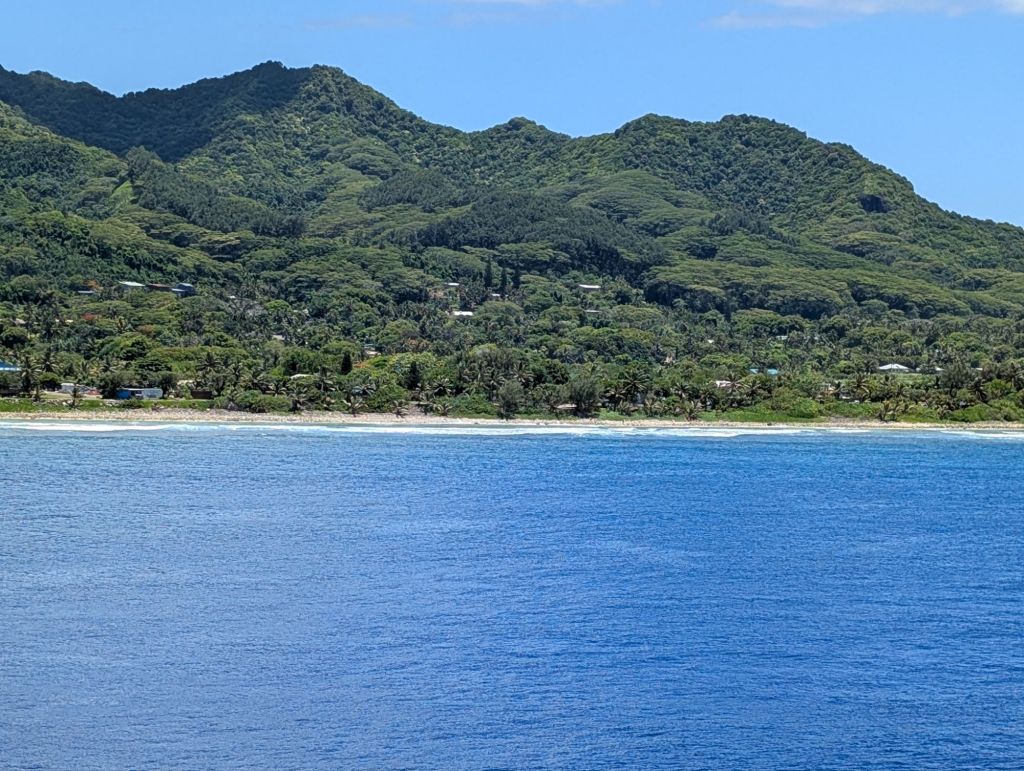
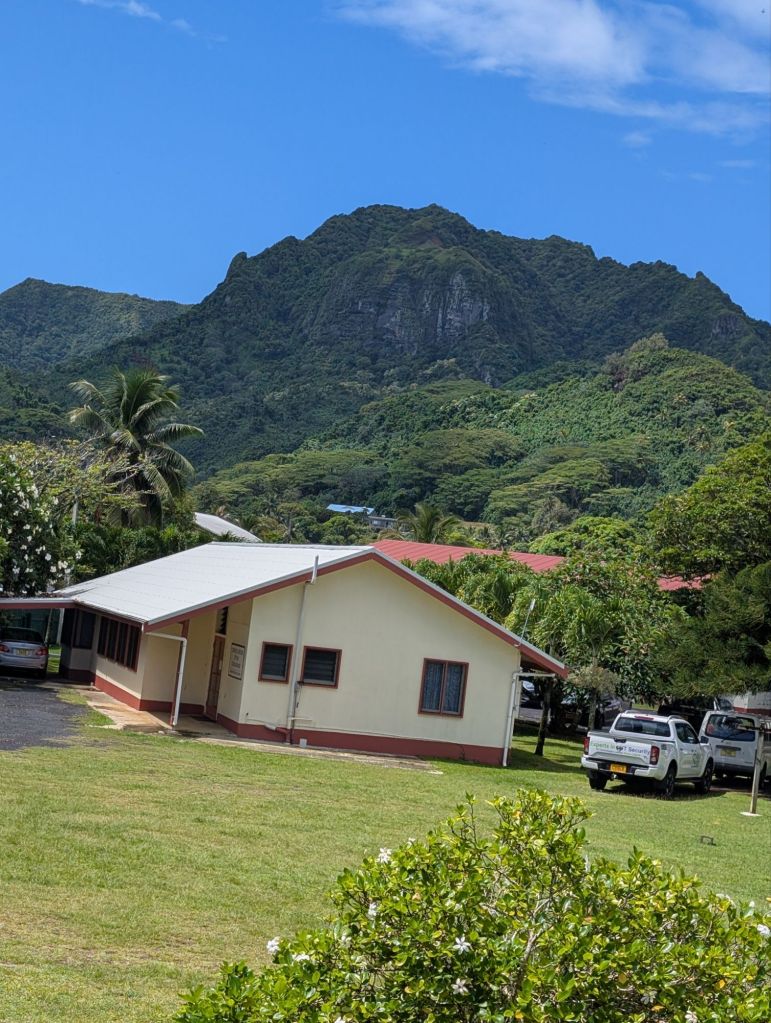
Today’s stop is the Island of Ratotonga, the largest of the 15 islands that form the nation of the Cook Islands. In 1901 the UK government made the Cook Islands part of New Zealand. In 1965 New Zealand granted the Cook Islands self-governing status. The total population today is approximately 14,000, with 7000 living on Rarotonga. The maximum timestay here is 30 days for tourists and 90 days if you are a NZ citizen.
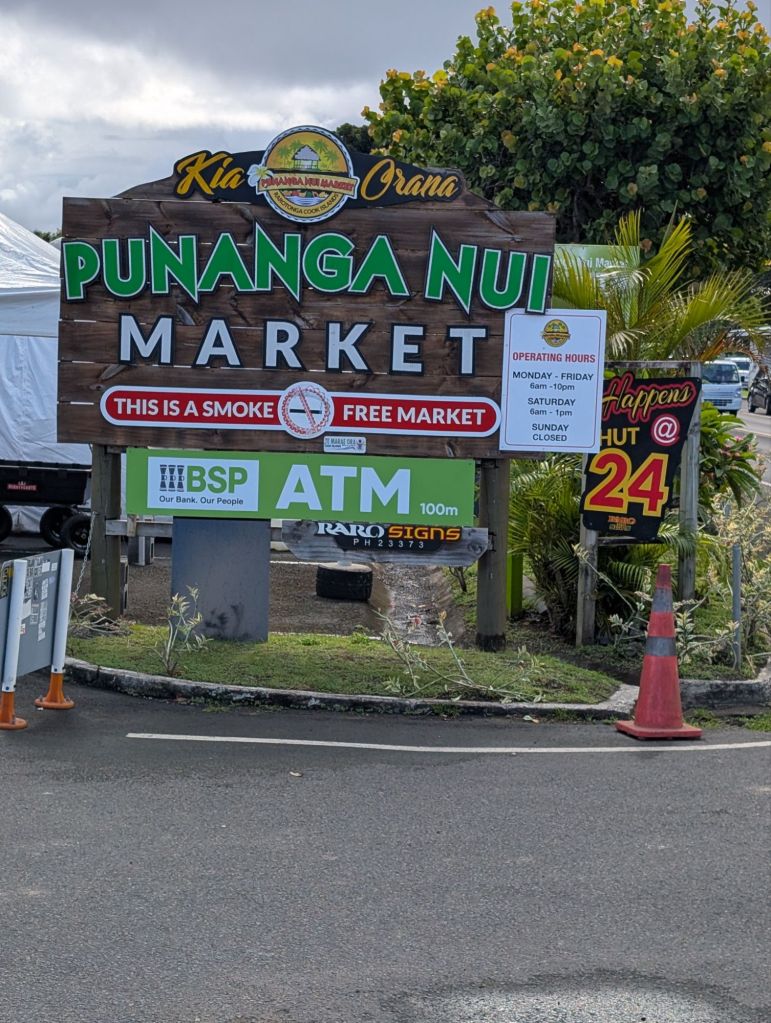
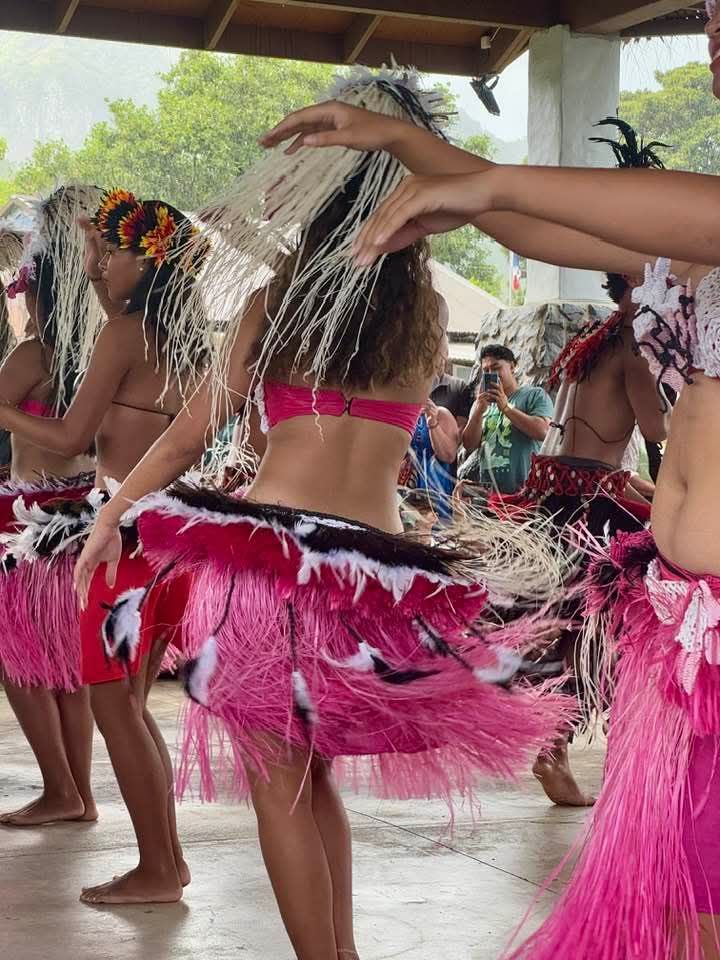
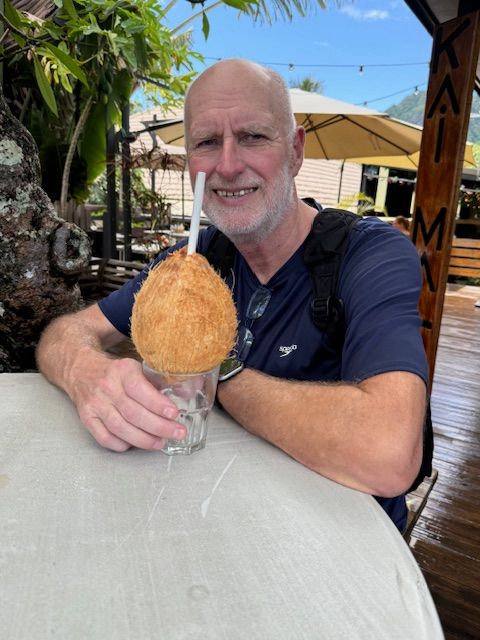
The stop today is a tender port. This means we have to board the small boats to transfer us to shore. During our transfer to shore we glazed at the shoreline covered by white sandy beaches. We arrived as I would say a small marine port with a wooden gazebo which functioned as a small information booth. The booth was staffed by 3 lovely ladies who gave us directions and an overview of things to do. Unfortunately many tours don’t operate on Saturday and Sunday. Luckily as it was Saturday today, there was a weekly market going on. A large contingent of the local population visits this market to socialize, buy their produce and listen to music. The music you hear sounds a lot like Caribbean reggae om. After a 5 minute walk we arrived at the market. It was a very lively place with numerous tourists mingled with the local crowd. Our first attempt to buy a good looking raisin scone was unsuccessful, as they only would accept NZ dollars. On our way through the market we spotted an ATM with a line up of people with the same problem. After it was our turn to get a few NZ bucks, the ATM machine decided to go out of service. Meanwhile the dark clouds in the sky decided to open up for about 20 minutes in an old fashioned tropical downpour. After the rain subsided a bit, we ventured out further towards the town. We luckily spotted a bank with an ATM machine. After getting our money , we felt it was time for a drink. We enjoyed a few coconut drinks with fresh banana bread. After we got a few $ we returned to the market. There was a colorful local native dance band performing at the market. We continued on through the market, till we ended up at the information gazebo. After a short break we decided to return to the ship. I think we did well today considering that Carol is still recovering from her surgery and myself dealing with a stubborn cough. For the night I laid low, as I didn’t want to cough over everybody, while Carol ventured off to the show with some friends.
Overall a good day. This location would be good to come back to and relax for a week. Nice temperature, very safe and friendly people.
First of all a correction to my write up about Pitcairn Island. One of my readers pointed out that from the 43 people who live on the island, 35 of them are direct descendants from the Bounty Muteneers and 8 are not. Thank You.
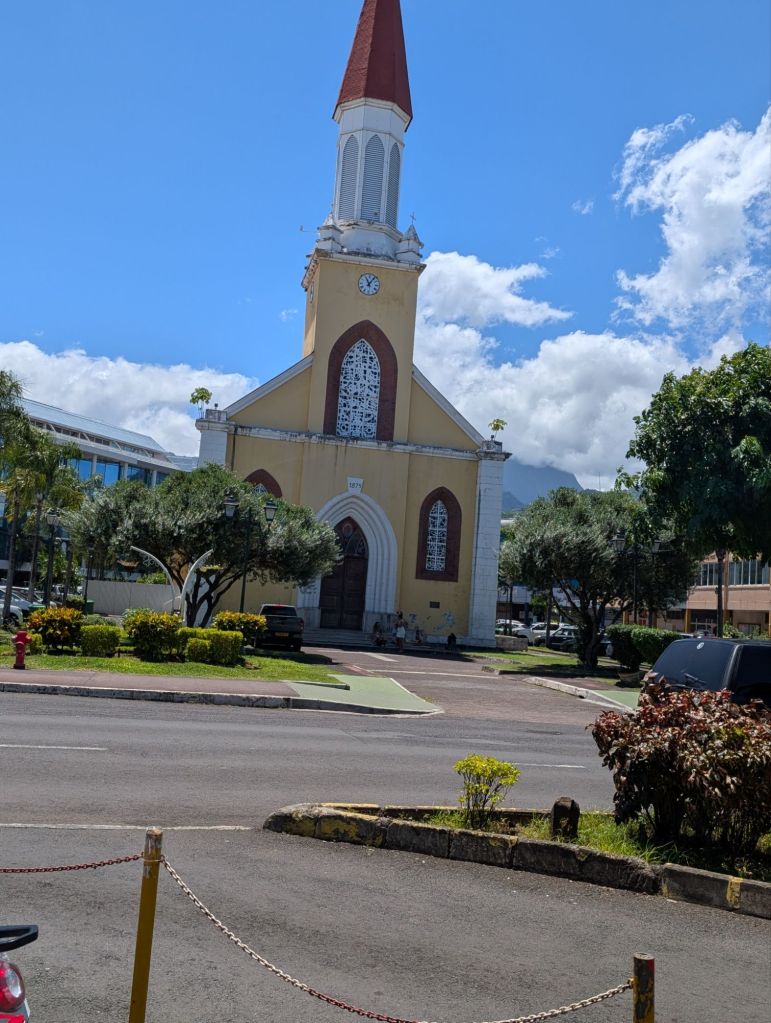
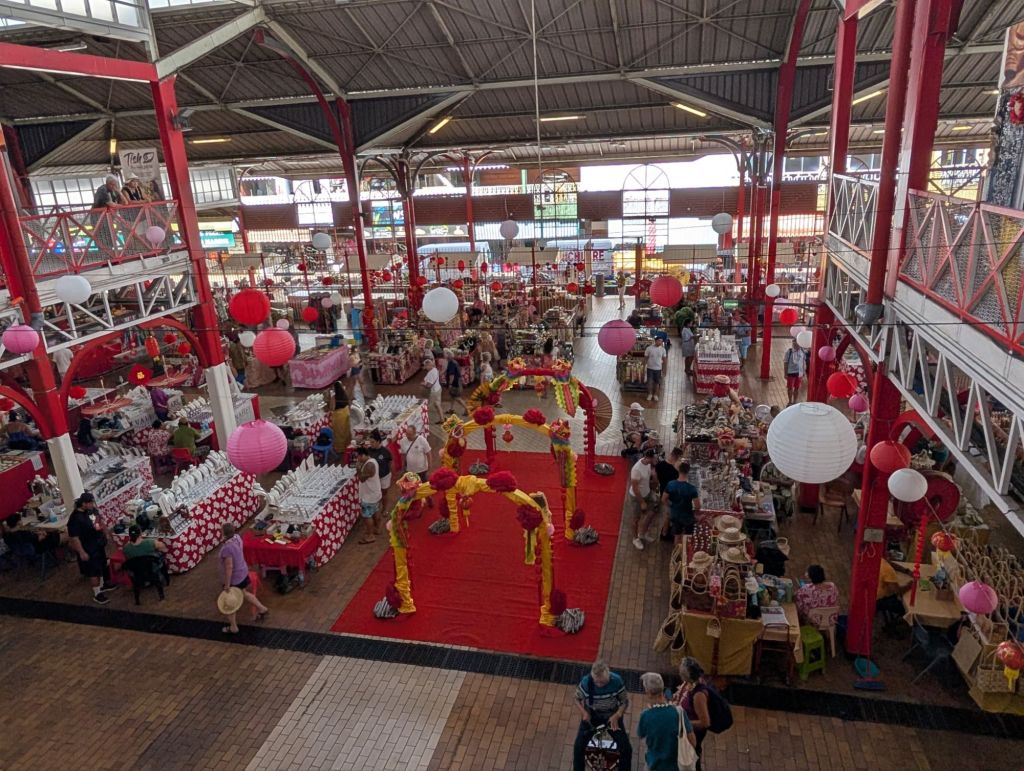
This morning we made a stop in Papeete, the Capital City of Tahiti. The population is approximately 300,000. We started the day with a stroll through town and a visit to the local market. We walked back to the ship around noon to prepare ourselves for the afternoon program.
To give you a little bit of the history of today’s program. Before we left Canada Carol tried to get an appointment with a dermatologist to check out a spot on her skin. We were unsuccessful in getting an appointment. Meanwhile she managed to book an appointment with a dermatologist in Mesa Arizona, as we had a short stay over there during New Years before we boarded our flight to Florida. The doctor took a biopsy to be sent to the lab. Unfortunately we didn’t get the results back after we had left on our cruise. The results were positive and it had to be attended to in
a month. Our first thought was that we had to fly home. Our next option was to have it dealt in Sidney Aus. The doctor on the ship was unable to get anything lined for Australia. The closest appointment he could get was in March, this was no option because we would’ve sailed past Australia.
in February. A few days before we docked in Tahiti, the ship’s doctor informed us that he managed to get us an appointment with a dermatologist in Papeete.
That afternoon we set off on foot to the doctors office in Papeete. After getting in the doctor’s office we realised that we didn’t speak French and they were speaking very little English. If it wasn’t for Google Translate, it could have been very difficult. The doctor examined Carol and was not able to do the surgery today. After we told him that we wouldn’t be home till May, he offered to do it the next day. The Doctor said if we would come in at noon the next day, he was willing to do the surgery at his lunch hour. We gladly took the appointment, as it was our only chance to get it done or fly home.
The ship was scheduled to leave the next morning at 4:00 AM. Now our next task was to embark the ship today and arrange for a hotel stay for the next 2 nights. We also had to arrange for a flight to catch up to the ship in Raiatea. After we had arranged all of that, now the process started to get our passports from the ship. This was quite the process, as it had to be approved by immigration. Finally by 10:30 that night we received our passports and departed the ship with just our backpacks. The port agent offered to drop us off at the hotel
The Kon Tiki Hotel was a pleasant surprise, a very modern place to stay in a great location. After having breakfast at the hotel, we departed for the doctor’s office. The doctor and his nurse were ready to do the procedure right on time. The procedure took approximately an hour. After we left the office, we had to catch a taxi and deliver the biopsy sample to the lab at the hospital. After the drop off we returned to our hotel for a little rest. That night we had a light dinner and went to bed early.
An early morning today. Carol was in a considerable amount of pain when she awoke this morning. We had arranged for the Taxi to pick us up and take us to the airport. After we arrived at the airport, it took a while before we boarded our Air Tahiti plane to Raiatea, with a brief stop scheduled at the island of Huahine. It was a very scenic flight with a few very bumpy landings. After we were in the process of approaching the airport, we spotted the cruise ship from the air docked in town. After we landed, we managed to get a shared taxi back to the ship.
It was a relief to have caught up to the ship. The rest of the day we explored the town of Uturoa on this very scenic island. During the day, I started to develop a cold and called’r the night early.
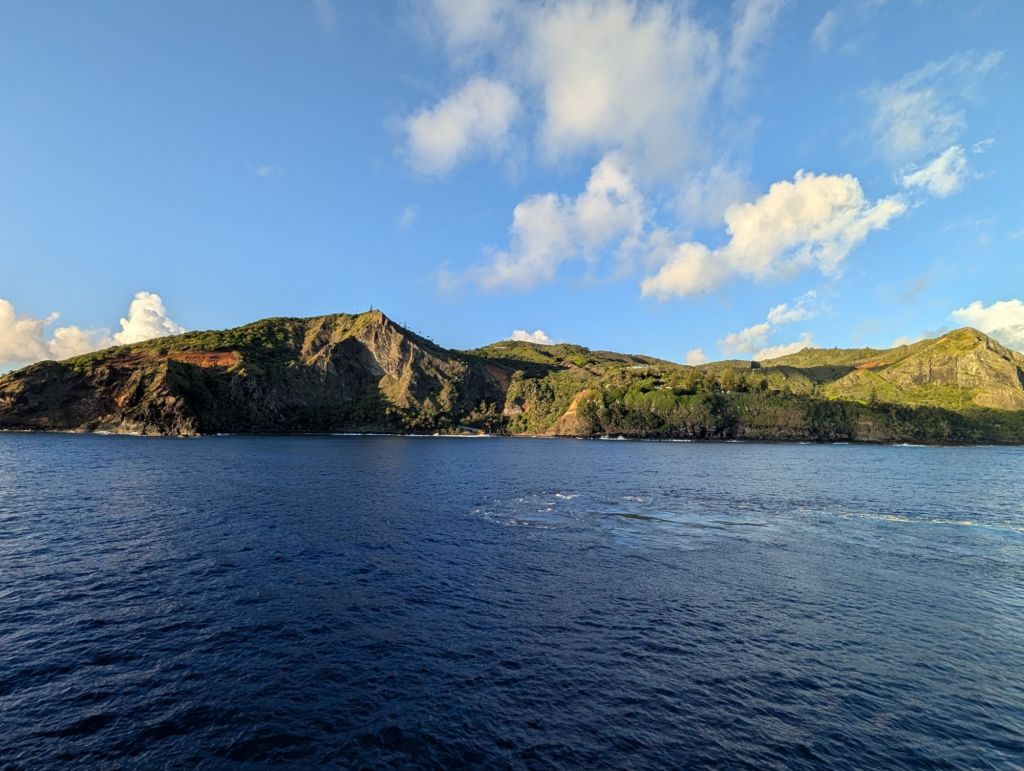
Today we met up with the people from Pitcairn. Pitcairn, mostly known from the mutiny on the HMS Bounty. Numerous books have been written and movies have been made about this event.
In 1789 Fletcher Adams took control of the HMS Bounty and burned the ship on the shores of the Island. The mutineers kept living on the island till most of them were murdered. The last mutineer John Adams built a life for him self on the Island, till he passed away at age 61 in 1829.
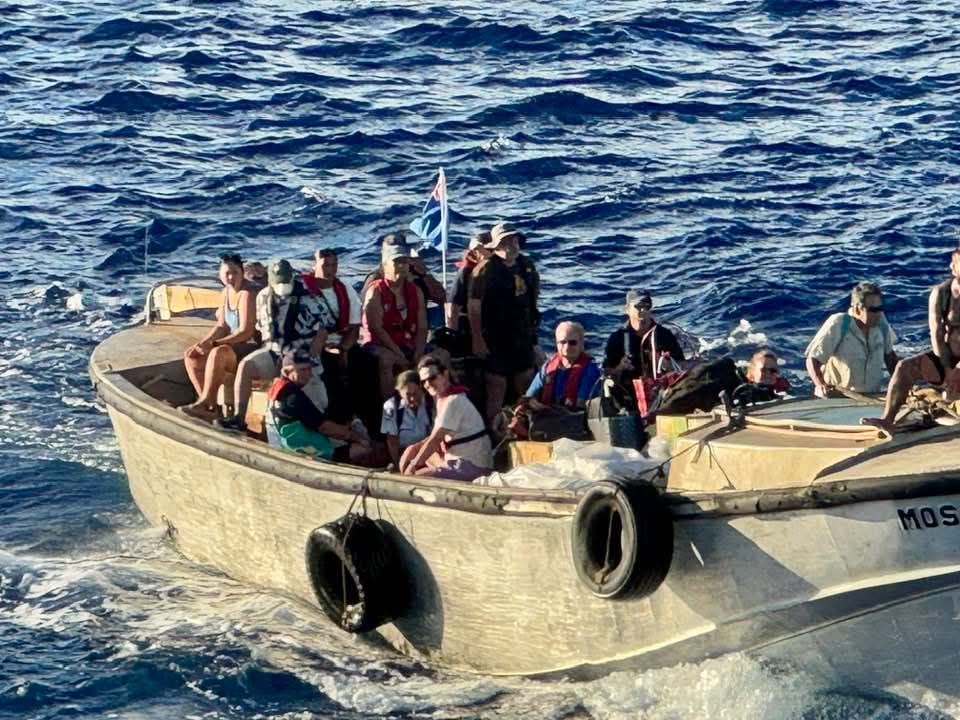
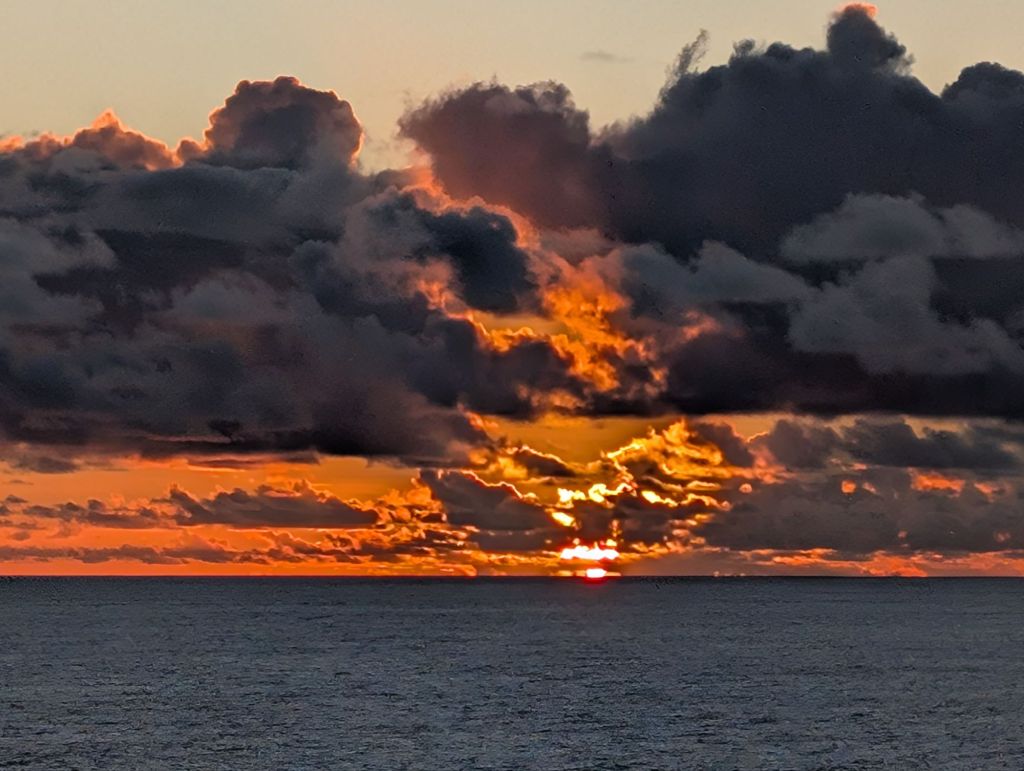
After watching the sunrise on the back deck, we were waiting for the arrival of the people from the Island to come on board. Just before 8:00 AM they pulled alongside the ship with their long boat. They offloaded all their goods onto the Cruise ship to be available for sale later at the pool deck. The items for sale were local honey, wood carvings and T-shirts etc. Postcards were also available for sale. There was also an opportunity to have your passport stamped.
At 10:30 the mayor was giving a speech on the mainstage and showed us slides of today’s life on the Island. There are 43 people living on the island as of today. From the 43 inhabitants, 8 are descendents of the Bounty Muteneers. After answering a variety of questions from the crowd, the longboat departed around 11:00 or shortly thereafter. Music was played and bounty cocktails were served when the islanders returned to the island. Before they left our ship, there was an exchange of fresh fish and fruit for beef, flour sugar wine and whiskey from the ship.
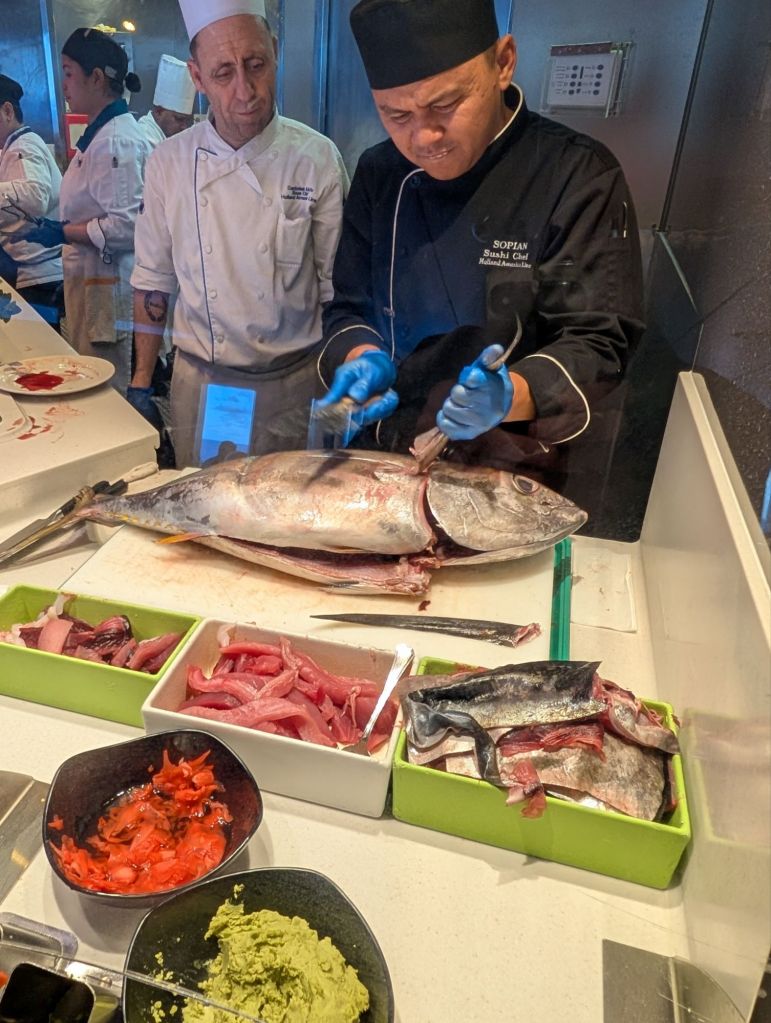
That evening we were treated to a fantastic meal of the fresh Tuna, Red Snapper and Coral Trout from the food exchange.
Good Morning readers! Another morning waking up outside Easter Island. My first action of the day was to look out the window and check the height of the swell. The swells didn’t seem to be worse than yesterday. For today I managed to get a spot on another tour on the Island. Today’s tour was to visit ancient cultures sites.
After a quick breakfast, we were ready to embark the ship by 8:00 AM. The tender ride over to the Island was a lot smoother than yesterday. After climbing out of the tender onto shore, the Chilean border agents checked our bags for fruits and food, which are not allowed to be brought onto the island.
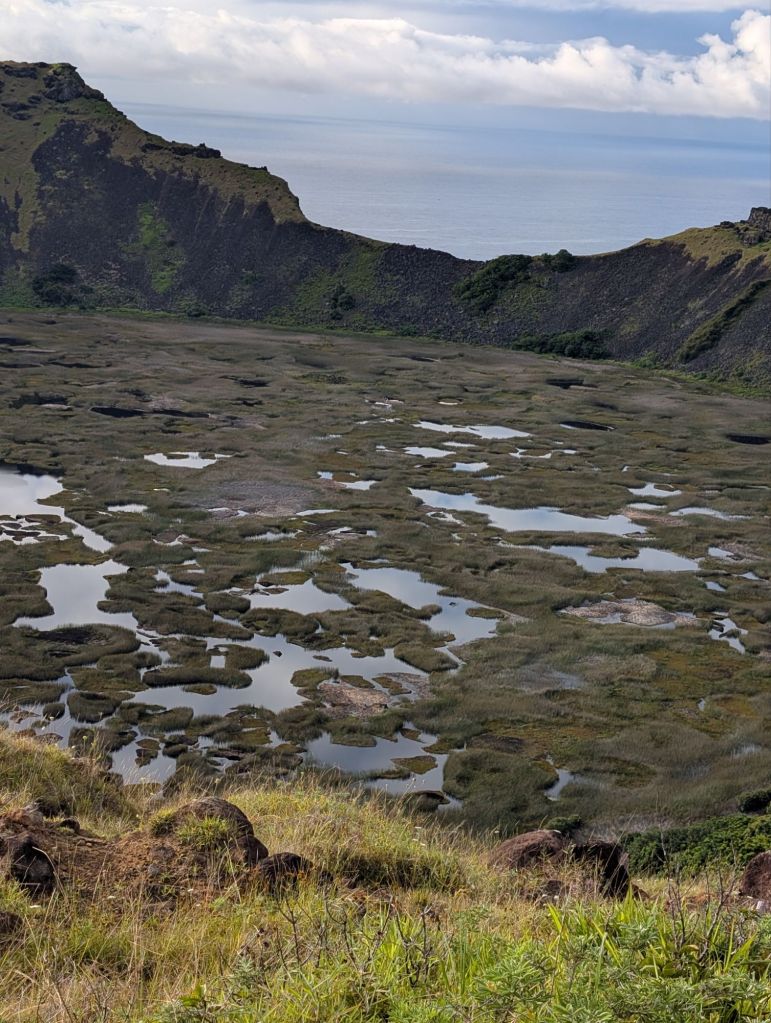
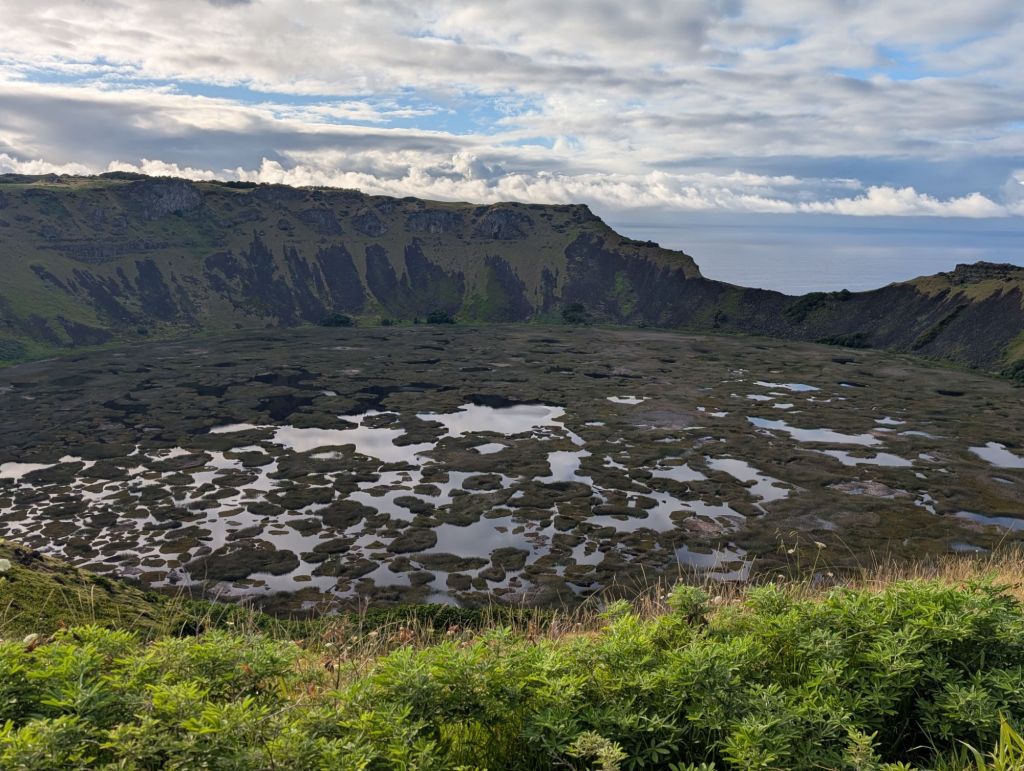
After we boarded the mini bus, we were on our way to our first stop. After getting off the bus we walked up a grassy incline to come to the edge of this enormous crater of a distinct Volcano named Rano Kau. The crater of the vulcano was created over 2 million years ago. The crater was almost a mile across and over 200 meter deep. The bottom of the crater is filled with water and all kinds of grassy island patches. The water quality is apparently very good and is safe to drink. In the bottom of the lake they discovered ingredients used to make medicines. The drugs are used in conjunction with organ transplant.
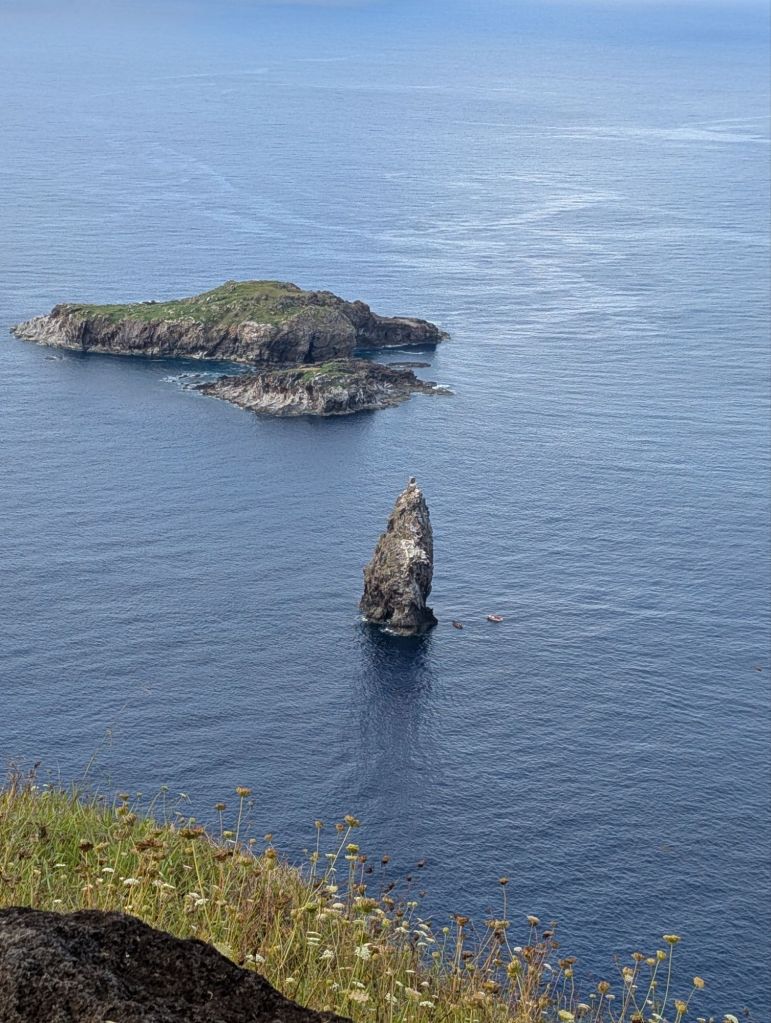
After the Vulcano visit we boarded the van onto our next location called Orongo. After a well needed pea break to dispose of this morning’s coffee, we followed a pathway overlooking the ocean till we arrived at a view point. We could see 2 small islands offshore named Motu Nui.
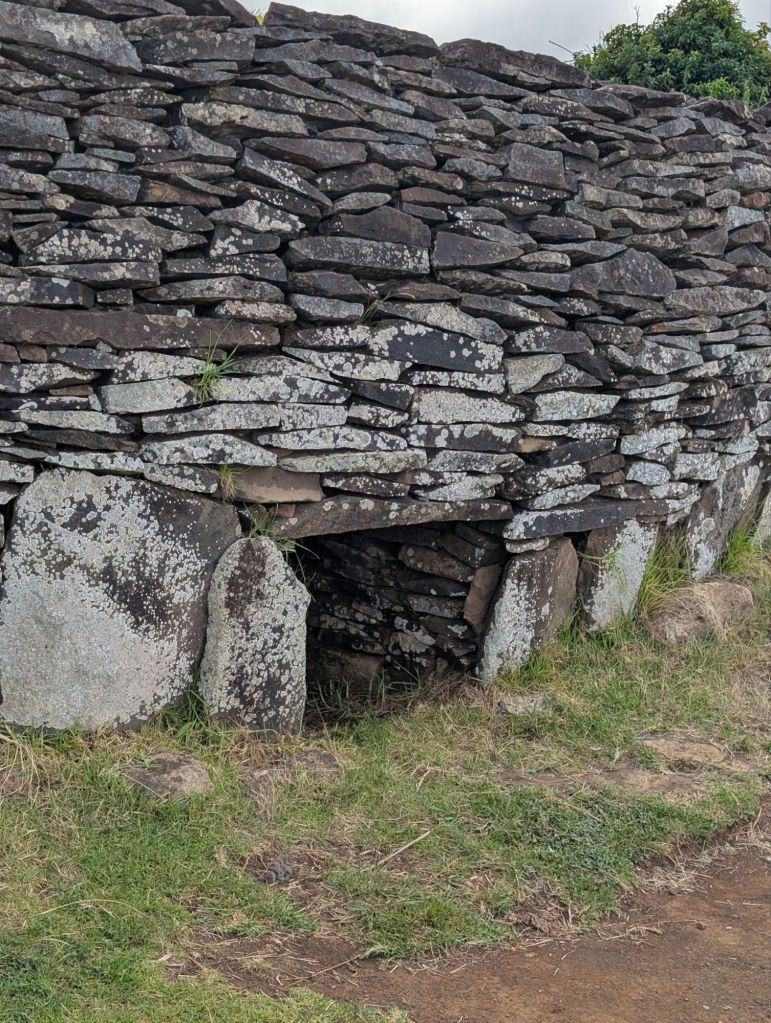
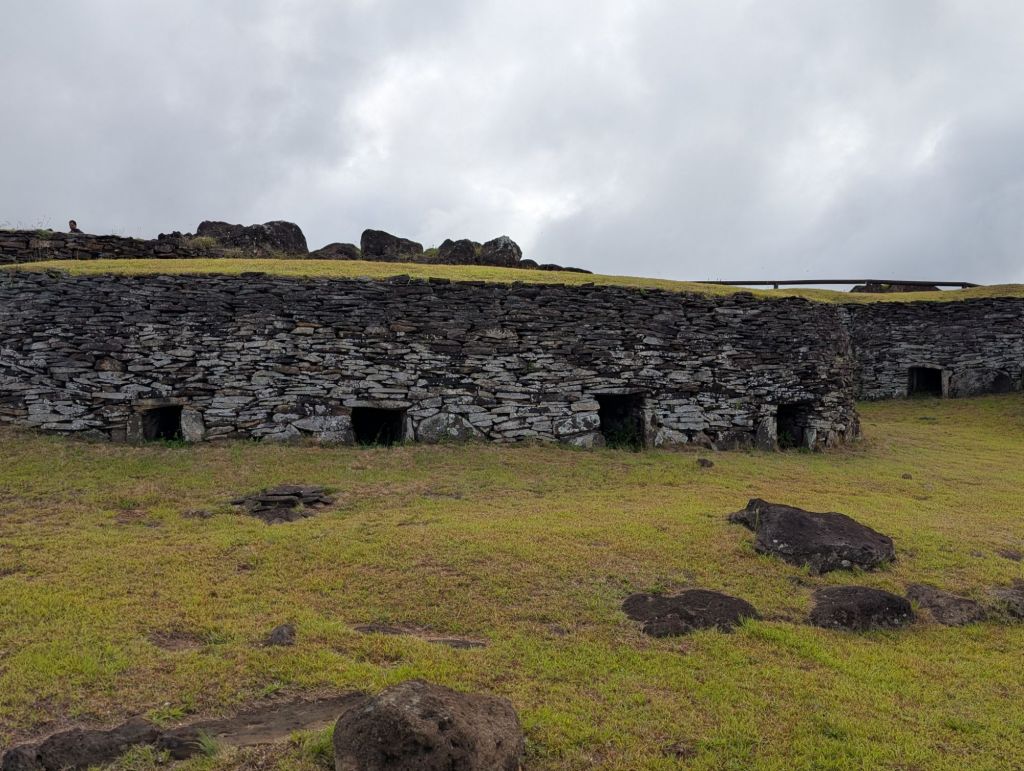
In the old days before approximate 1880 the Bird Man competition was held here. After the Sooty Tern (Sea bird) flew out to sea, the men in the bird man competition would swim to the small island and waited there for the bird to return and lay their eggs. The man who found the egg was the winner and had to swim back to the main island and scale the 250 ft rock cliff with the egg tight to his head and hand the egg over . The following year he and his family were entitled to that year’s harvest. It was said that many men died during the swim due to rough seas and sharks. After this visit we followed the path up the hill a little further and came to a series of small stone houses with small openings where people used to live. These small stone dwellings were only approximately 5 ft high. Definitely not built for comfort. After rounding the stone buildings we walked along the rim of the Vulcano crater towards our Van onto our next stop.
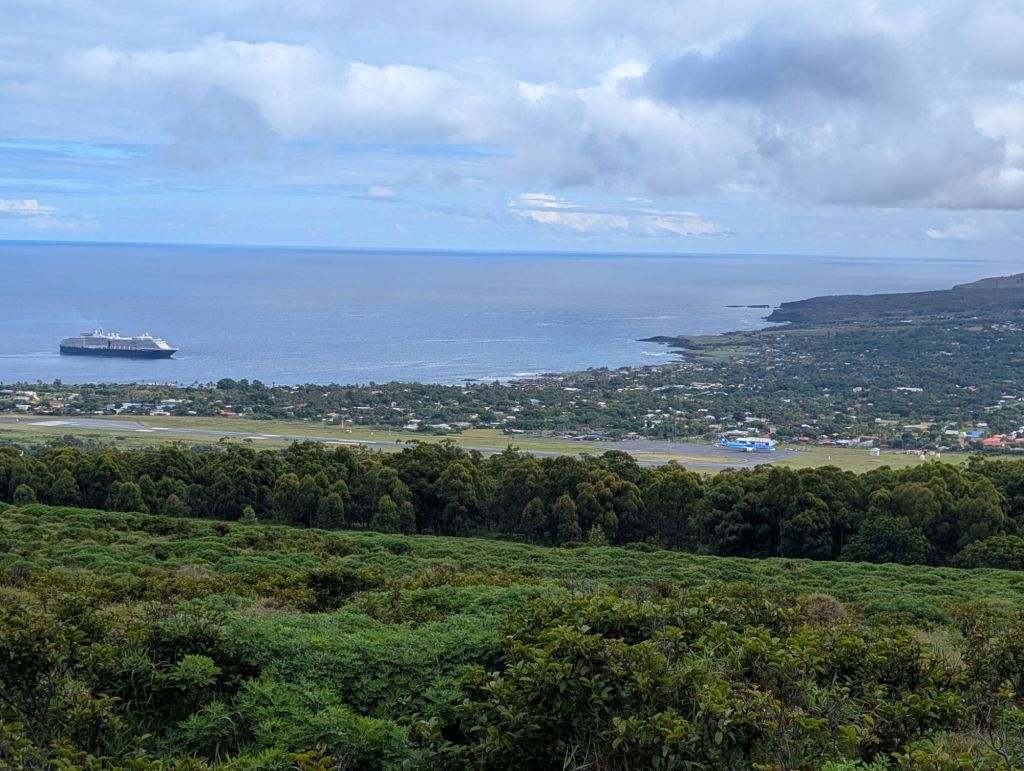
Our next stop was a view point overlooking the town of Hangoa-Roa and the airport. Two daily flights come in daily from mainland Chile and the occasional flight from Tahiti. It is a six hour flight to Chile. After taking a few pictures and dodging an herd of cows which are roaming freely along the roads, we carried on through town to a Moai site we actually visited yesterday.
After the Van dropped us off at the dock, we boarded the tender back to the ship. That afternoon a sail away party was organised on the back of the ship after we lifted the anchor on our way to our next location.
After being in doubt for several days if we were able to land on the Island, it ended up being two fantastic days.
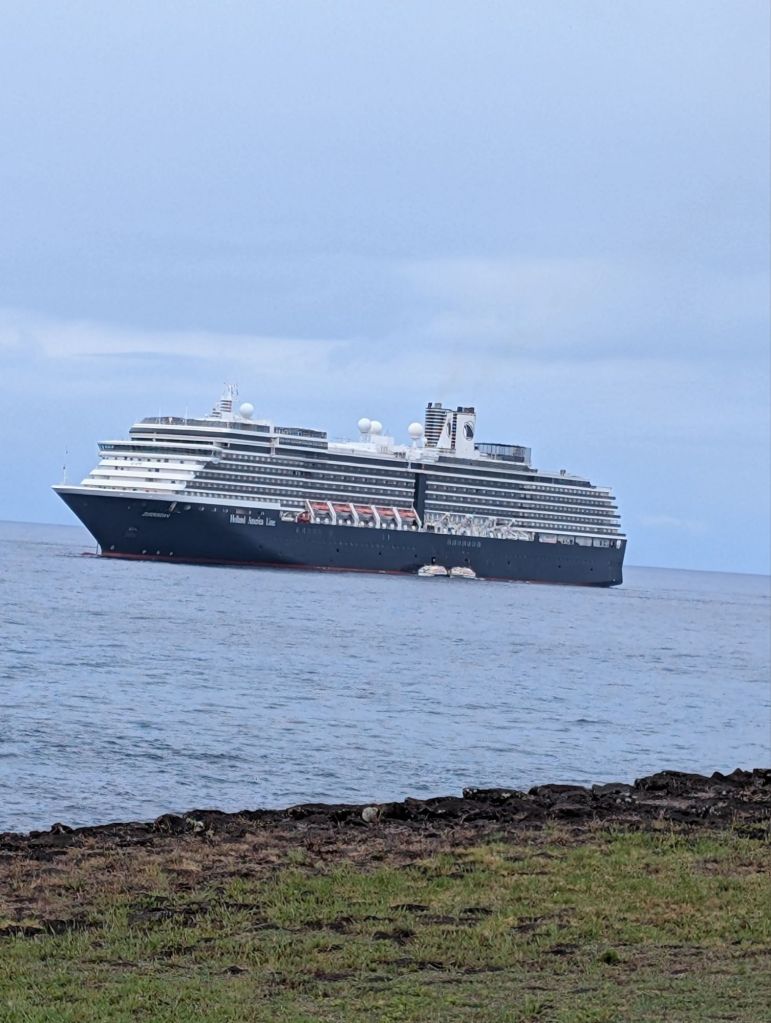
Early this morning we anchored offshore outside Hangoa Roa, the main town on Easter Island. Easter Island discovered in 1722 by Dutch explorer Jacob Roggeveen. He landed on Easter Sunday 1722 and named it Easter Island. Today the island is part of the South American country Chile and the main language spoken is Spanish
For days the big question was, are we able to land. In order to land, the sea swell have to be 4ft or less to have a safe tender operation to shuttle people to shore. Generally only 1/3 of the Cruise Ships who visit are able to land here. Luck was on our side, as the swells were down to 4ft.
By 10 AM our shore excursions group was ready to leave the main ship. Getting onto the tender was quite something with the sea swell. After a rough ride we made it to shore.
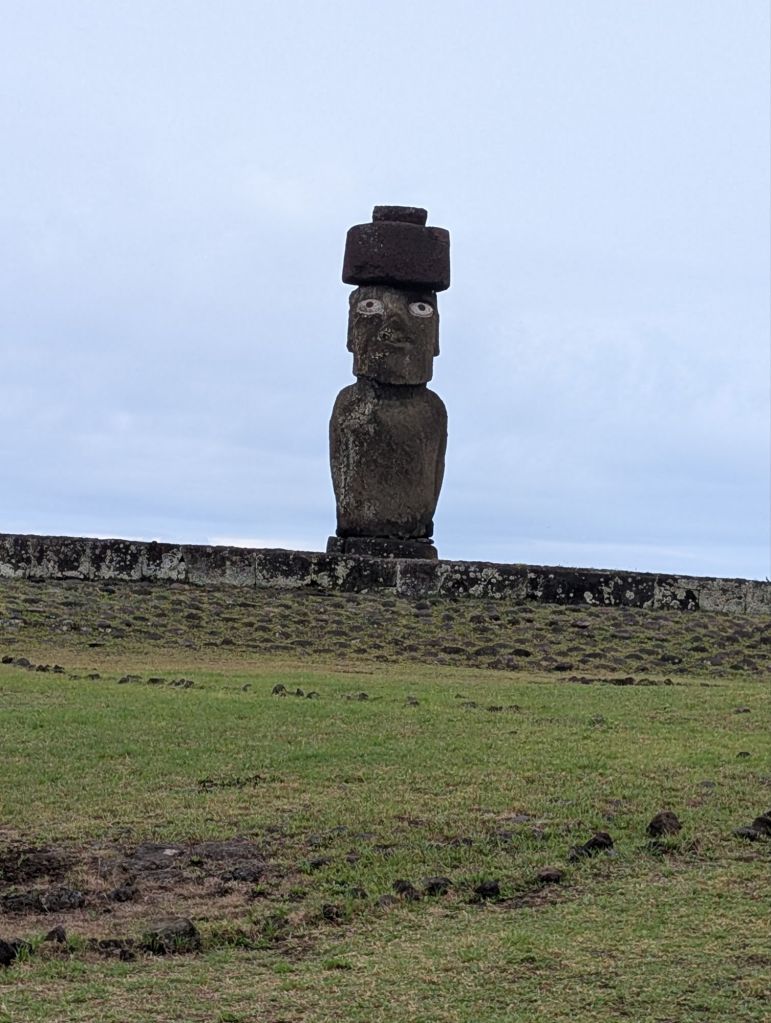
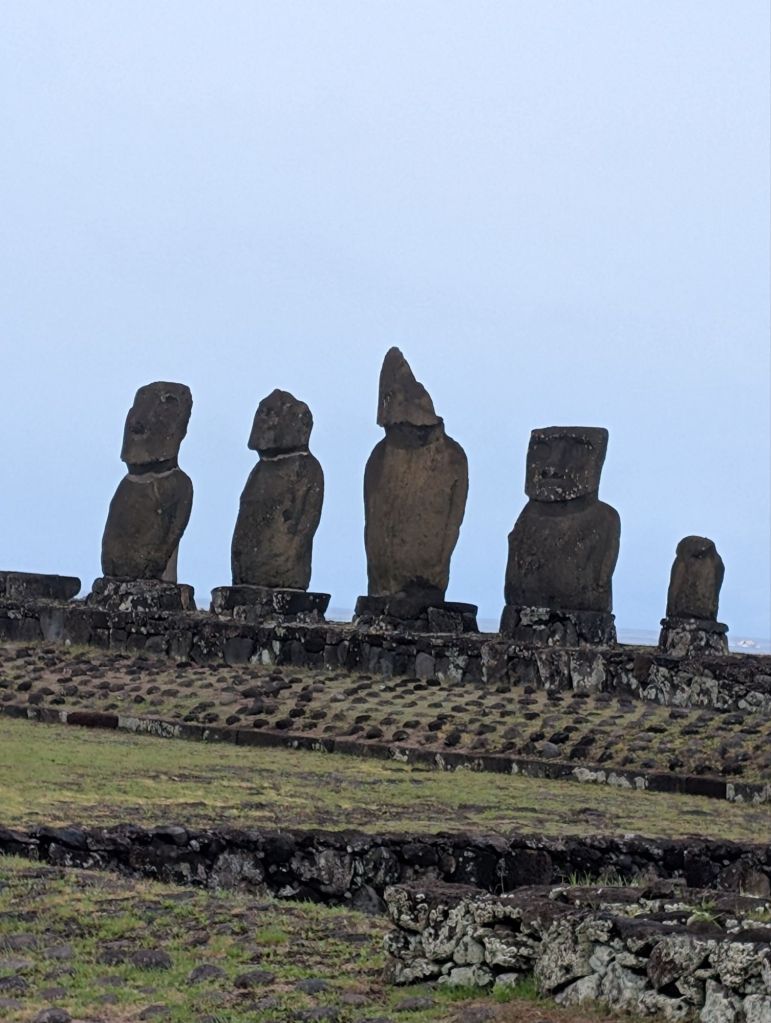
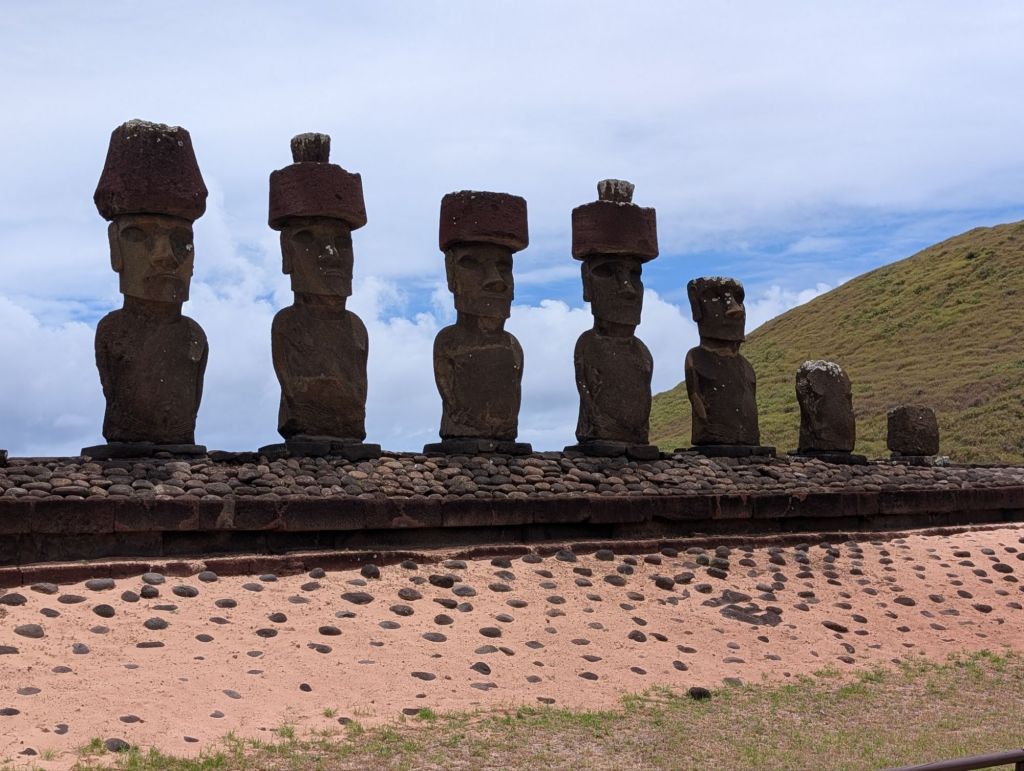
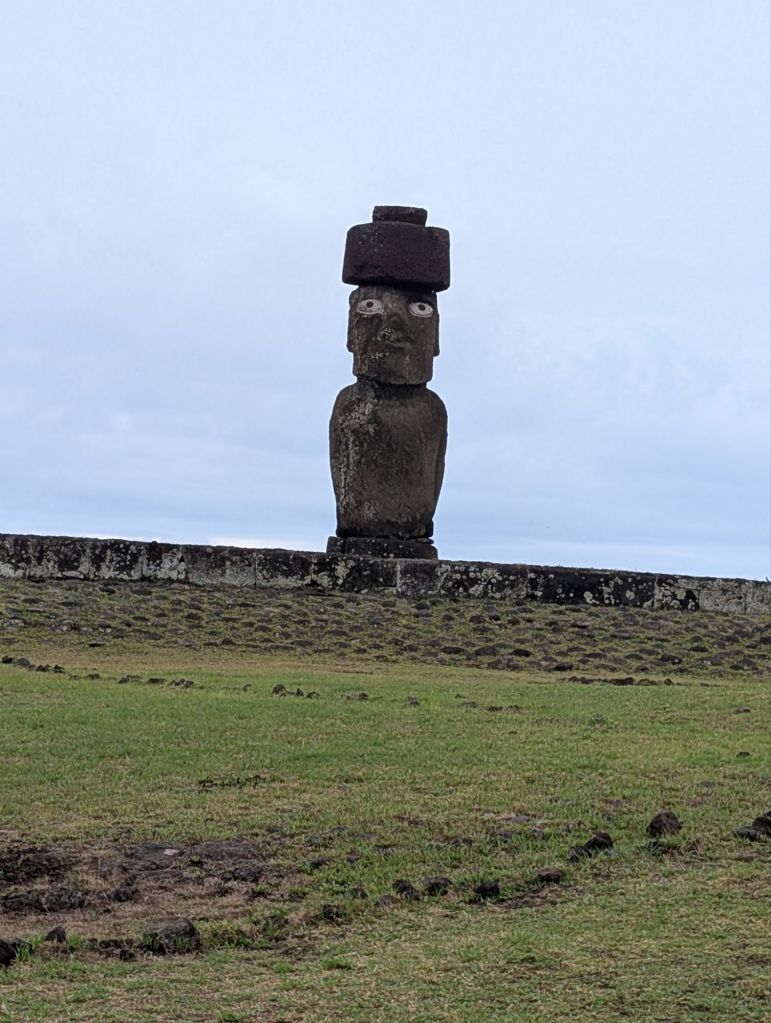
For today we had a tour to visit 4 different Moai sites. the first site had about 6 different statues.
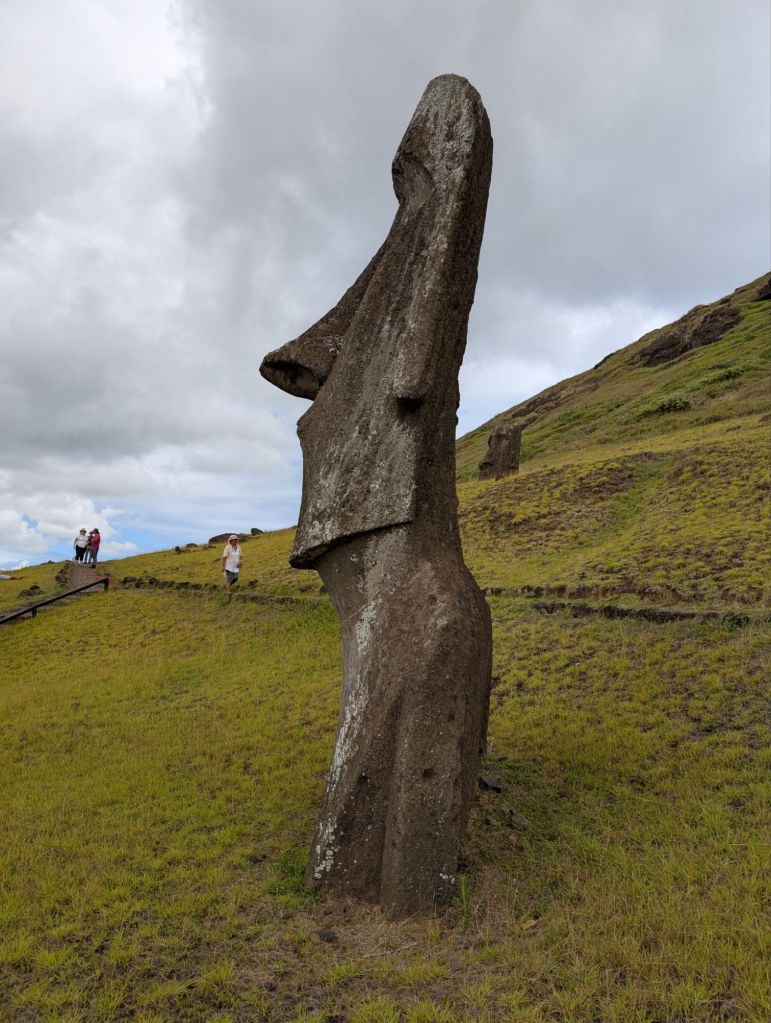
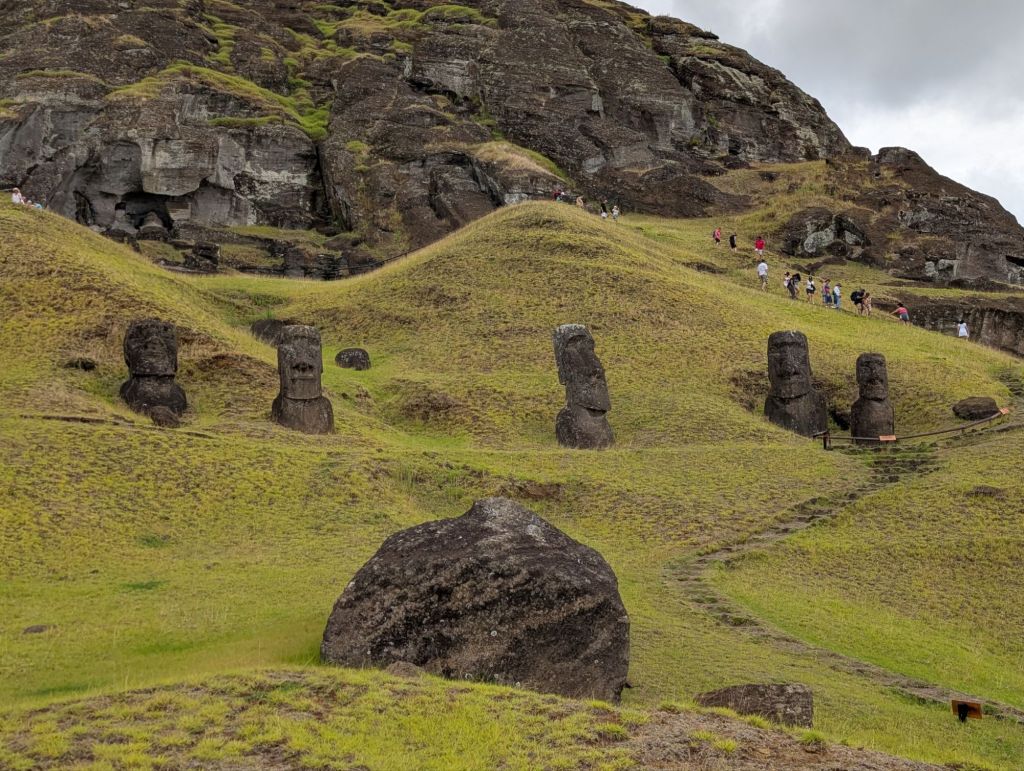
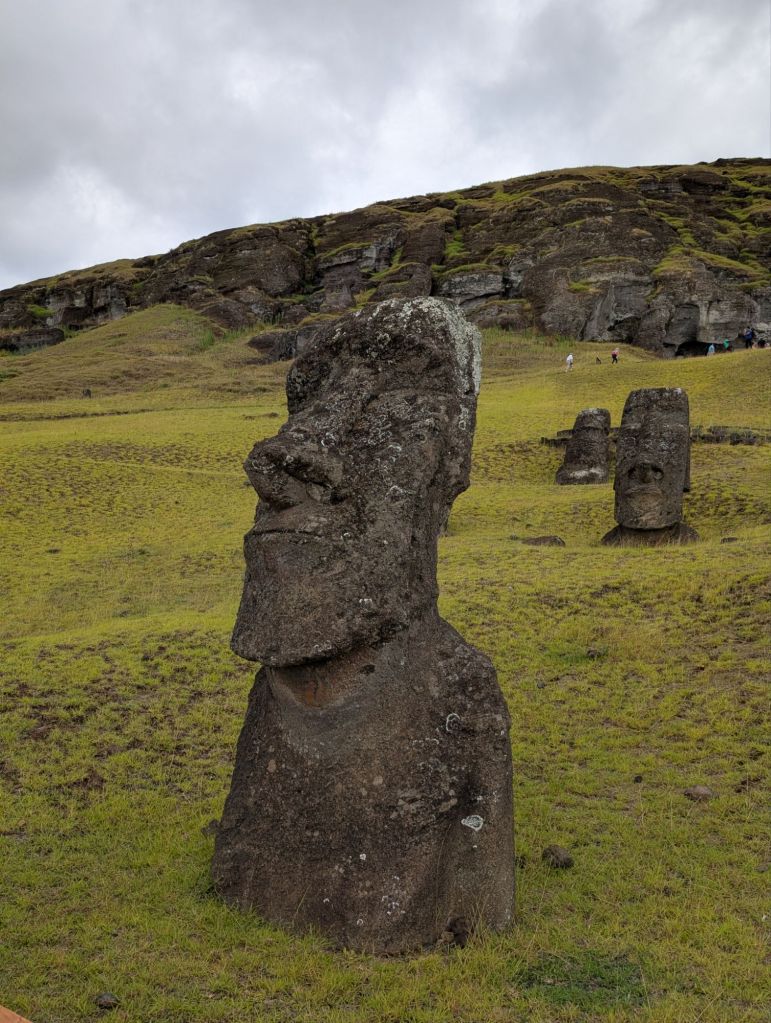
After an half hour stop we carried on to our next site called Rano Rarahu Park. here we found statues in all kinds of shapes and sizes. There were over 300 statues in various states of repair This was also the site of the quarry where all the moai’s were carved.
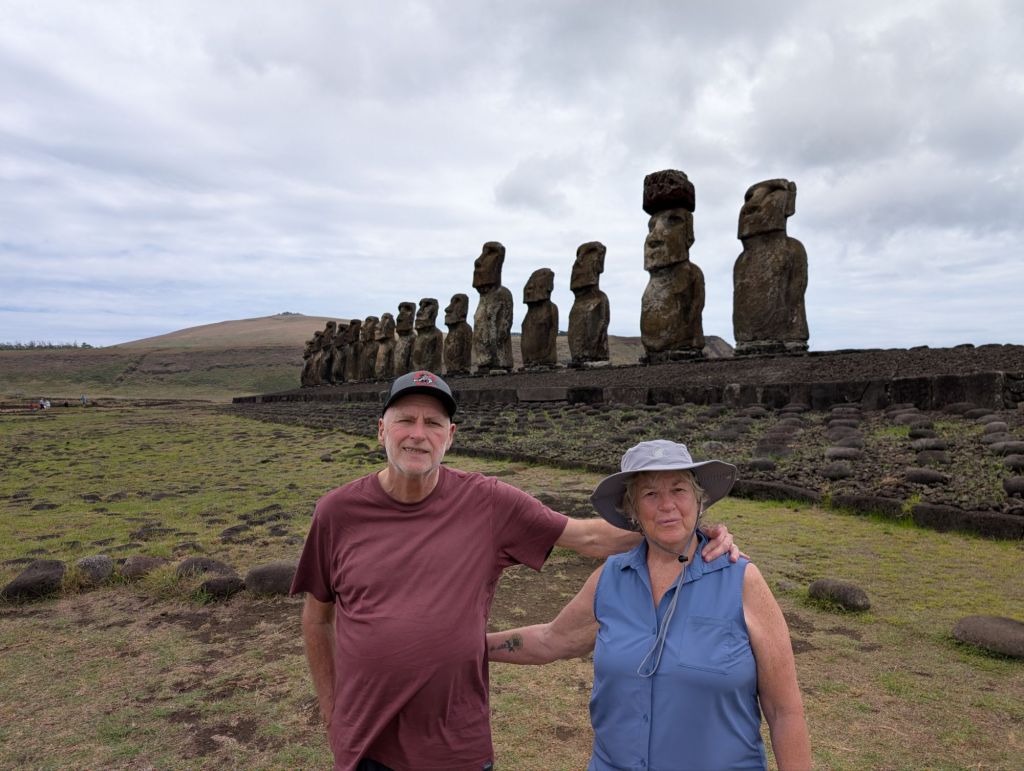
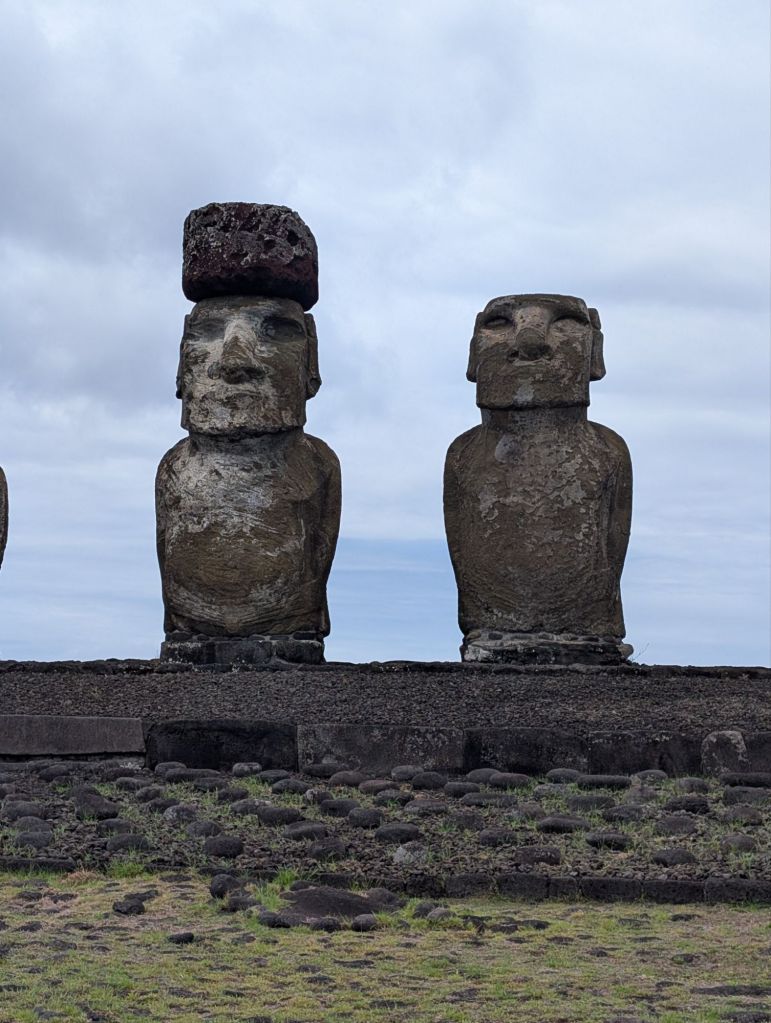
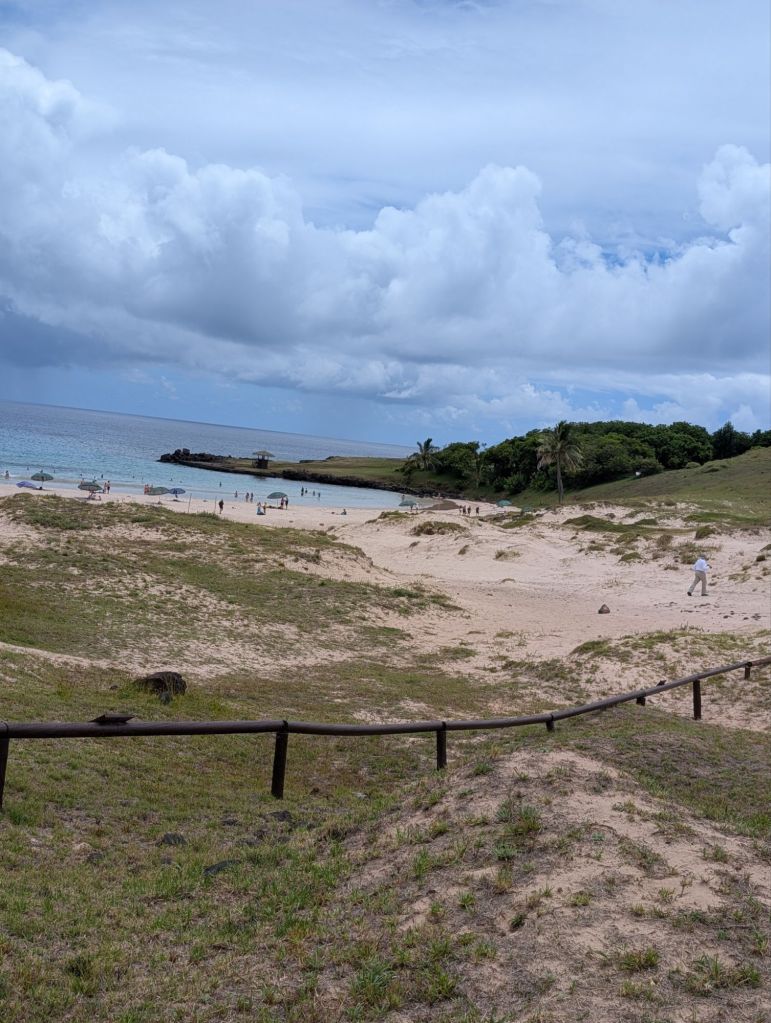
After visiting this park, we drove for 10 minutes to get to our next site near the ocean. All the Moai statues on the island are facing away from the Ocean. At this site found an ingredible Row of 15 statues.
From here we went to our last stop at the beach park, where we found another couple statues. The fact remains, how did they move the statues from the quarry to the different sites over the island, some as far away as 5 miles. The larger statues are nearly 30 ft tall and weigh 80 ton.
After getting back to the dock, we boarded the tender for another rough ride to the ship. The unloading was quite eventful, because some passengers just don’t listen to the crew to sit down till they are called to embark the tender boat. End result was, they ended up banging their heads and ended up on the floor. That will hopefully teach them a lesson for next time.
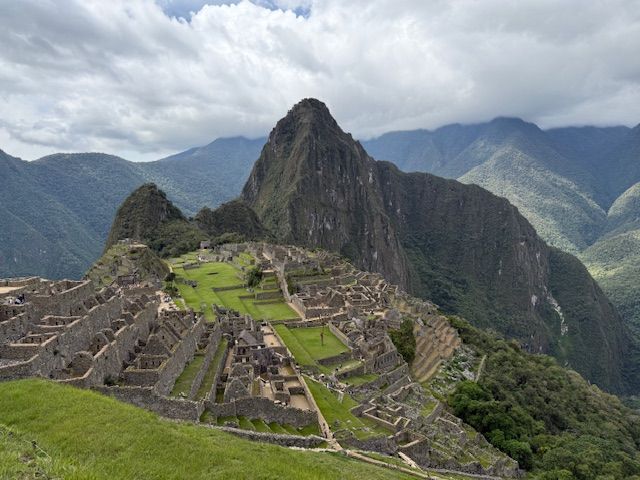
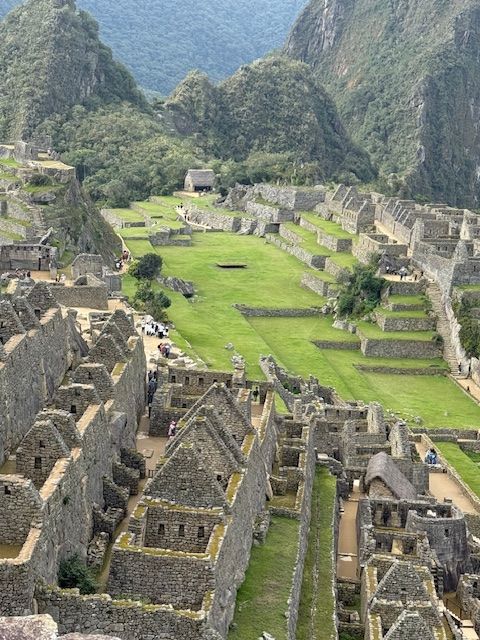
On Jan.14, I left the ship for 3 days to visit Machu Picchu, a World UNESCO site high in the Andes Mountains of Peru.
Our excursions started with an hour flight from Lima over the Andes to Cusco. Cusco is at an altitude of 11,152 feet. When we left the plane we were told to walk slowly and take short breaks. I was fortunate, I had no effects from the dreaded altitude sickness. Many in our group did and they were provided with oxygen and coca tea by the hotel.
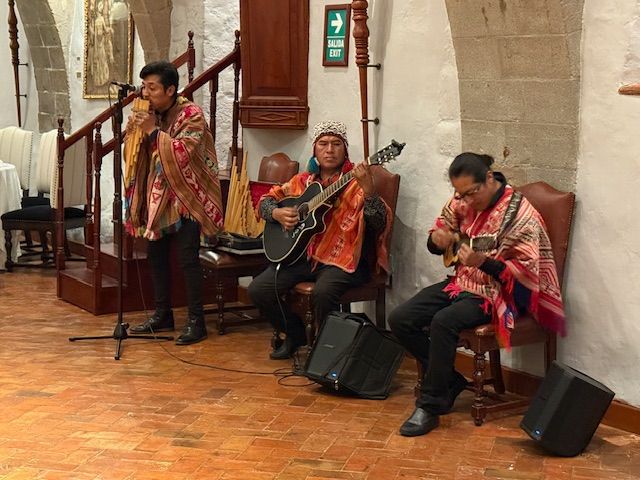
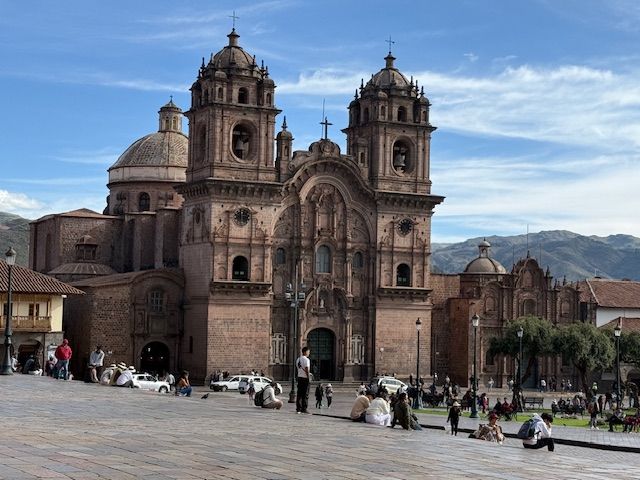
Our beautiful hotel, Belmond Monasterio was situated right on the Cusco town square. We were lucky to be here for two nights. The first night was to help us acclimatize to the decreased oxygen levels. During a dinner, we were entertained by a musical group playing pan flutes and colourful dancers.
We left Cusco the next day to make our way to Machu Picchu. That involved 2 bus rides and a train ride on the elegant Hiram Bingham train along the sacred Uranamba River to Aguas Calientes. The train is named after the fellow who rediscovered the Inca citadel in 1911.
Our entrance time to visit the Machu Picchu site was 2 pm. We spent 3 hours in the citadel which was built in the 15th century. Our guide, Oscar gave us an excellent tour of the Lost City of the Incas. We saw the way that the massive stones were held together without mortar. He showed us the Sun Temple and some of the amazing astronomical features used in Machu Picchu as calendars and as part of their religious festivals.
We returned to our hotel at 10pm and went to bed immediately as we had breakfast at 4 am and then head to the Cusco airport in order to be back in Lima in time for our ship’s departure.
Machu Picchu was an unforgettable journey for me. I have wanted to go for many years. The majesticmountains, incredible Inca history and the spiritual quality of this amazing place left its mark on me.
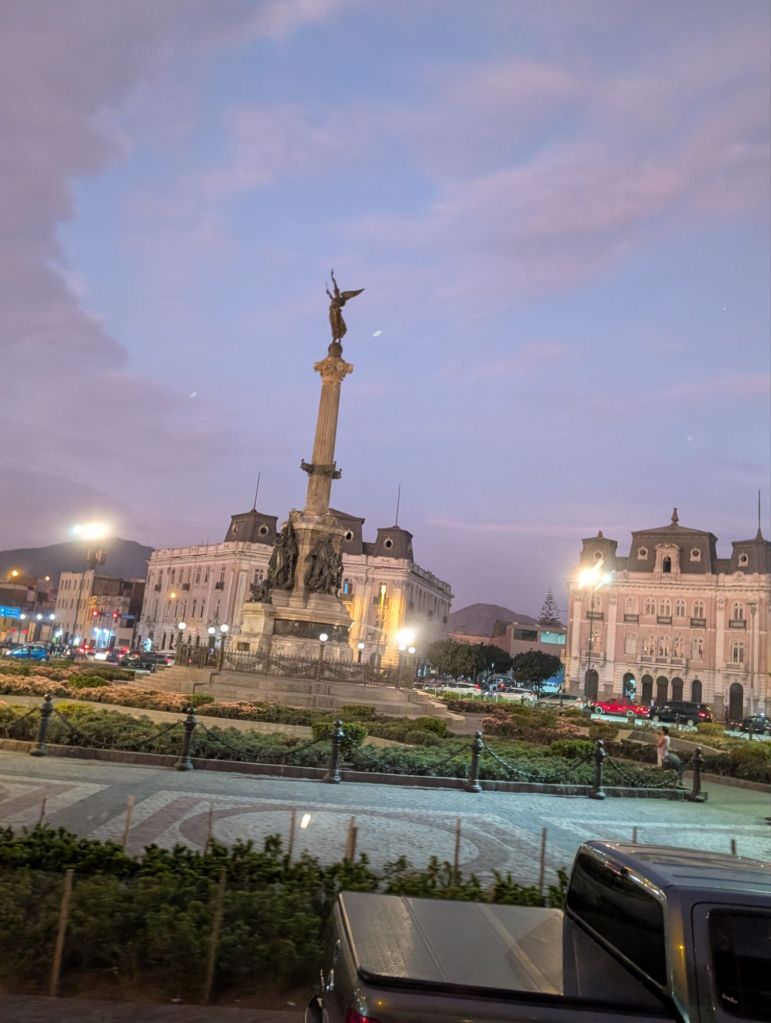
After being at Sea for Two days, we anchored in the port city of Callao. Callao is a bustling container port. There were also numerous large ocean grain bulk carriers being unloaded. Callao and Lima are basically connected. This morning I hopped on a shuttle bus to the outside of the port where there was supposed to be a terminal with a market. I must not have listened correctly, when the bus stopped outside the terminal, there was no market in sight, just a dozen cab drivers reaching in the bus to pull you in their cab. I decided to ride the shuttle back to the boat, as it didn’t look very safe to me. Meanwhile outside the boat a dozen or so vendors had set up their tables with numerous textiles, jewelry and souvenirs.
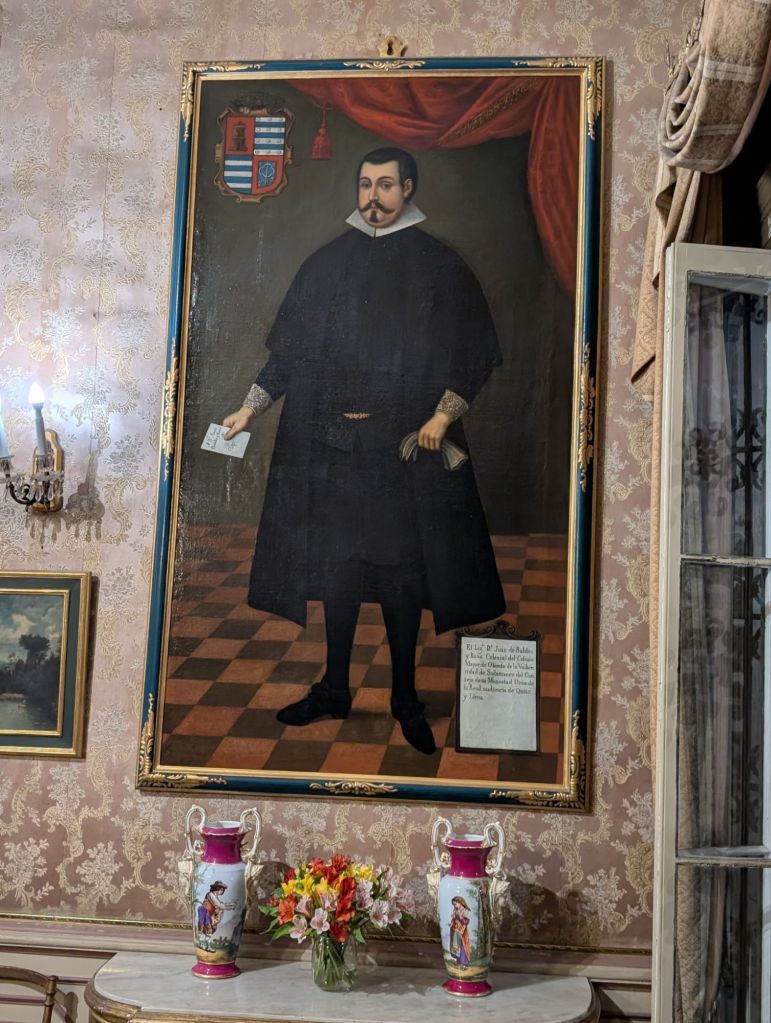
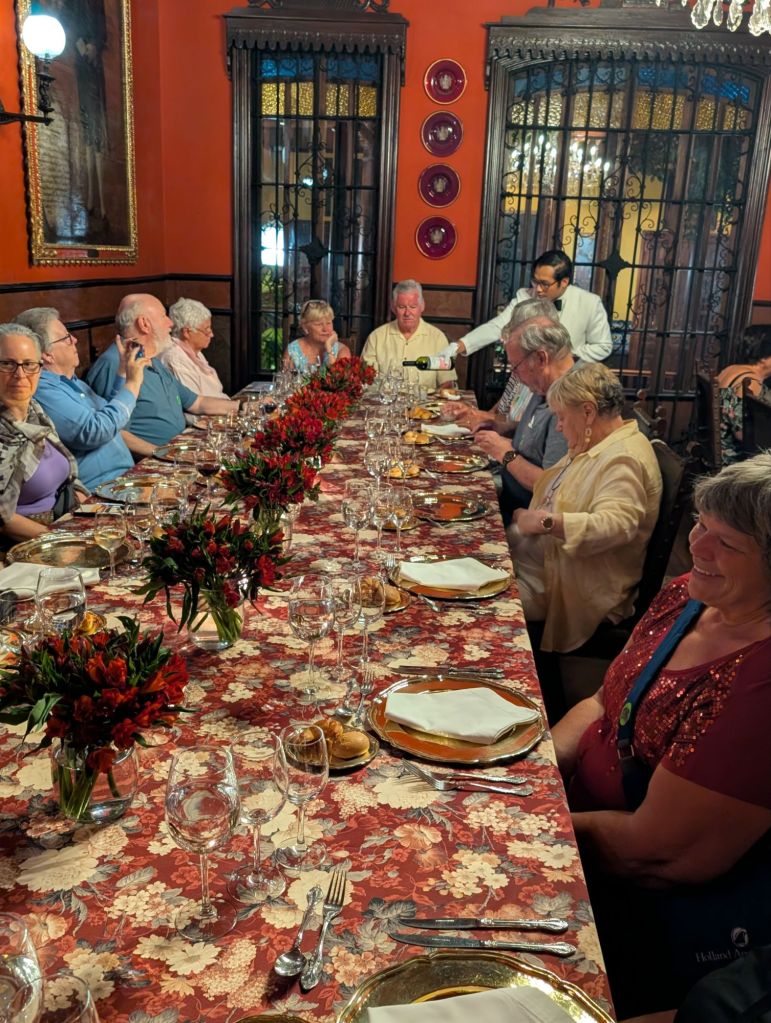
For the night I had booked an tour to visit an old house in downtown Lima, where the current family who lived there had invited us for dinner. The bus ride up to the house was something else. The traffic was horrendous. Everything goes on the road. Not much for traffic rules like we are used to at home. A bus ride that should have taken 20 minutes took us nearly an hour and half. When we got to our destination, we still had to walk 4 blocks to the house. With several people assisted with “walkers” , I thought this could become a challenge, but we all got to the house safely and left nobody behind.
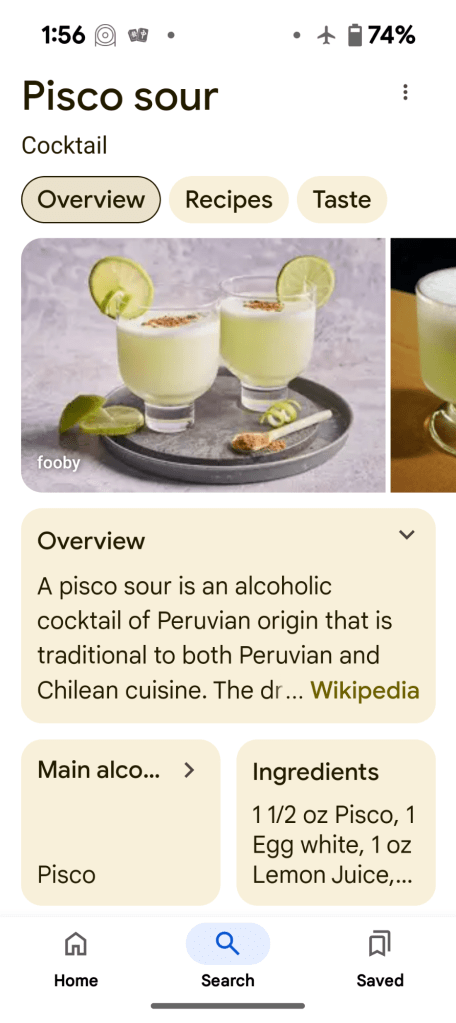
Inside the house we were greeted by the staff. The staff were serving Pisco Sours and hors d’oeuvres. Pisco Sour is national cocktail in Peru. ( they are very yummy) The inside of the house was stunning, build in 1532 and kept in pristine condition. The floors consisted of beautiful hardwood and white marble stairways. The walls were covered with beautiful old paintings and a variety of art pieces.
After being seated on two long tables the staff served us an very nice dinner consisting of an artichoke starter, tenderloin main and custerd apple dish for dessert. All of this complemented with white and red wine.
After dinner we walked back to the bus to take us back to the ship. During our walk back, we witnessed local people enjoying the summer night playing music and games on the street. The traffic on the ride back was slightly better than earlier that night. Back on the ship, I closed out the night with a Casa Amigos on the rocks.
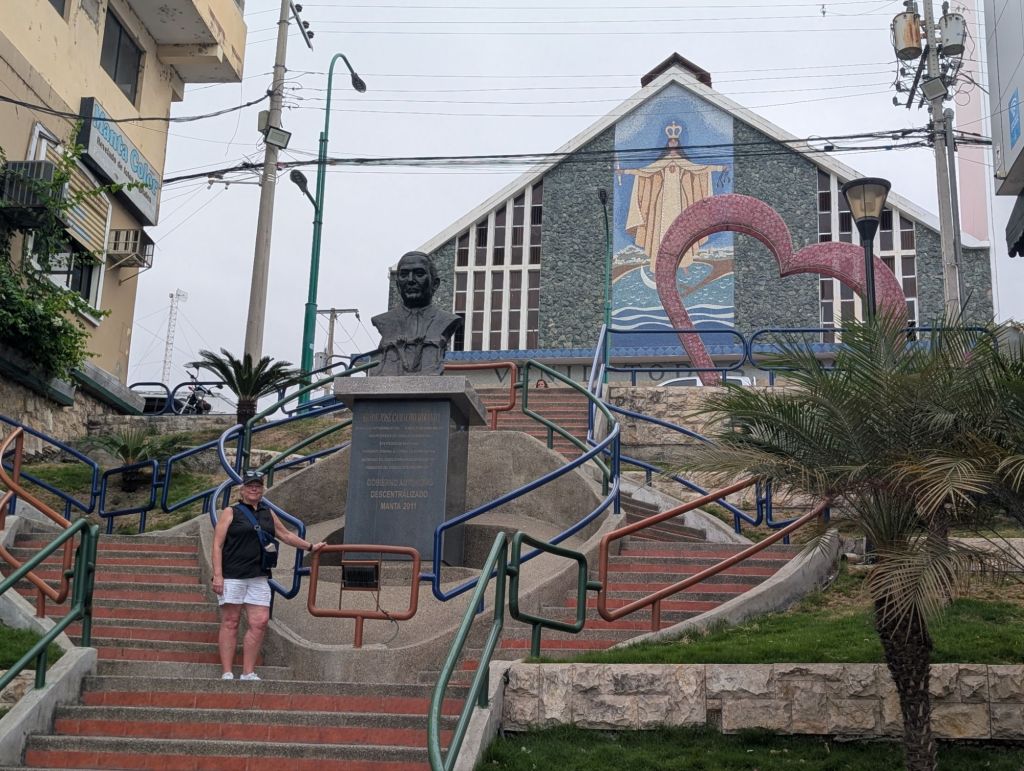
Around 4:00 this morning we arrived in Manta the second largest city in Ecuador. For today we did not book any tours. After we had breakfast we walked off the ship. We kept following the Malecon, searching for an Artisan market. The artisan market was nowhere to be found, instead we decided to go for a coffee at a little cafe. We were lucky we had Google translate on our phone so we could start a conversation with the waitress regarding the market. She gave us directions towards something called a Central Market but to behold it was not really an artisan market at all, instead we found carcases of pigs and chickens hanging off the ceiling and there was also a market where they were selling produce. We noticed that we were the only non Equadorian people in this area of town, that made us decide to better walk back towards the beach.
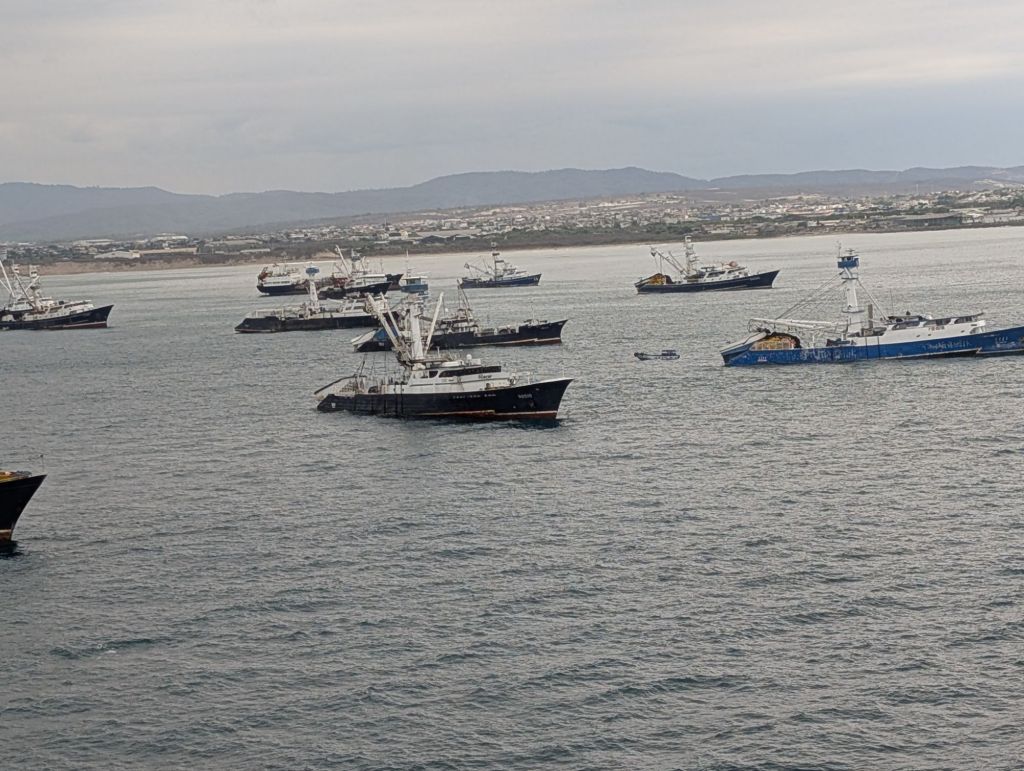
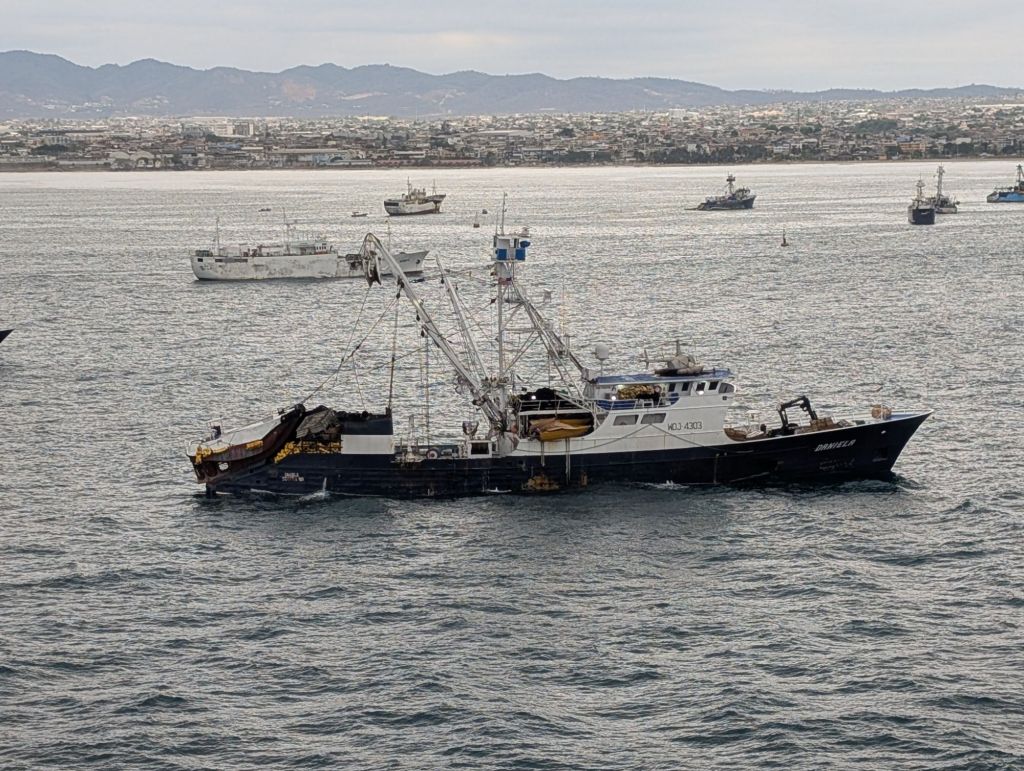
The Bay was littered with large fishing vessels, I counted at least 60 of them. Apparently they are Tuna fishing boats. Some of the boats had helicopters parked on their deck to look for the fish. Arriving back at the terminal there was a small market setup. There they were selling souvenirs and a variety of other wares. I managed to get myself a Panama hat. Even though they are called Panama hats, they’re actually made in Ecuador. After the stop at the market we made it back to the ship safely. After lifting the anchor around 10:00 p.m, we were off on our way to our next stop.
 buysprojects.travel.blog